
Understanding and diagnosing bruxism
Bruxism refers to the involuntary grinding or clenching of the teeth, generally at night. It may be linked to stress, bite (occlusion) problems or neurological factors. The consequences are many: premature wear of the teeth, fractures, muscle and joint pain (TMJ), headaches. At Cabinet Côté Gare, we identify bruxism through a clinical examination of the wear facets on the teeth and by listening to the symptoms the patient experiences.
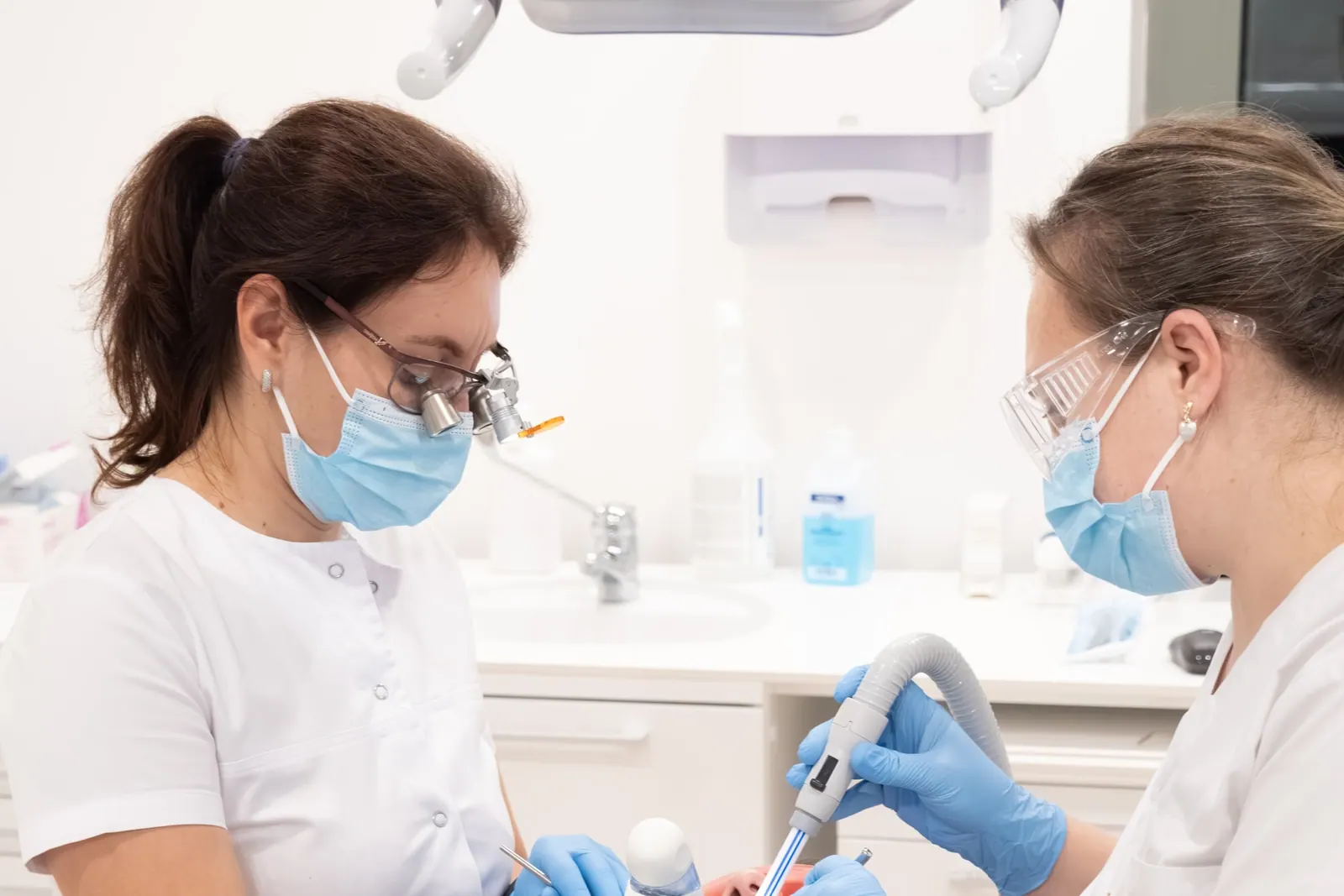
Occlusal splint and comprehensive management
The main treatment consists of making a custom occlusal splint, to be worn at night. It protects the teeth from wear and relaxes the chewing muscles. For complete treatment, we also take aggravating factors into account: stress management, posture, sleep quality. In the case of joint problems, physiotherapy sessions may be recommended as a complement.
Frequently asked questions
How do I know if I suffer from bruxism?
Morning headaches, jaw pain, worn or sensitive teeth, or a partner who hears grinding are suggestive signs.
What is a Michigan splint?
“Michigan” refers to a type of design, not a brand: a rigid splint that covers a whole arch and is worn at night. The splint made here is custom-made from an impression of your mouth. The type that suits your situation is chosen at the consultation, according to the wear observed and the condition of your joints.
Is the splint comfortable?
Yes. It is custom-made, from an impression of your arches, and adjusted when fitted. An adaptation period of a few nights is normal.
How long should the splint be worn?
For as long as the bruxism persists. It is replaced every 3 to 5 years depending on wear.
How much does a protective splint cost?
The price depends on the type of splint and the laboratory work. It is communicated to you before it is made. A detailed treatment plan and a personalised quote are given to you at the first consultation, before any treatment begins.
Can bruxism cause jaw pain?
Yes. Clenching and grinding put strain on the chewing muscles and the temporomandibular joint (TMJ), which can cause muscle and joint pain, and headaches. The splint protects the teeth and relaxes these muscles. In the case of joint problems, physiotherapy sessions may be recommended as a complement. Jaw pain that lasts is examined at a consultation: it does not always originate from bruxism.
Can bruxism damage the teeth?
Yes. Enamel wear, cracks and sensitivity to cold are the most frequent consequences. The splint takes the friction in place of the teeth.
Does the splint cure bruxism?
It protects the teeth and relieves the jaw muscles; it does not remove the cause. Stress, sleep quality and sometimes the bite come into play, and we discuss this during the examination.
How do I look after the splint?
Rinse in cold water after each use, brush gently without abrasive toothpaste, air dry. Hot water deforms it permanently.
Is bruxism treatment reimbursed?
In Switzerland, basic insurance does not, in principle, cover dental care. Depending on your supplementary insurance, a contribution may be possible: the detailed quote we give you can be submitted to your insurer.
