
Root canal treatment
Endodontics treats inflammation or infection of the dental pulp, the living tissue inside the tooth. When this pulp is affected by a deep cavity, trauma or a fracture, root canal treatment becomes necessary to avoid extraction. At Cabinet Côté Gare, we carry out this procedure using an operating microscope and nickel-titanium instruments, for great precision and more comfort for the patient.
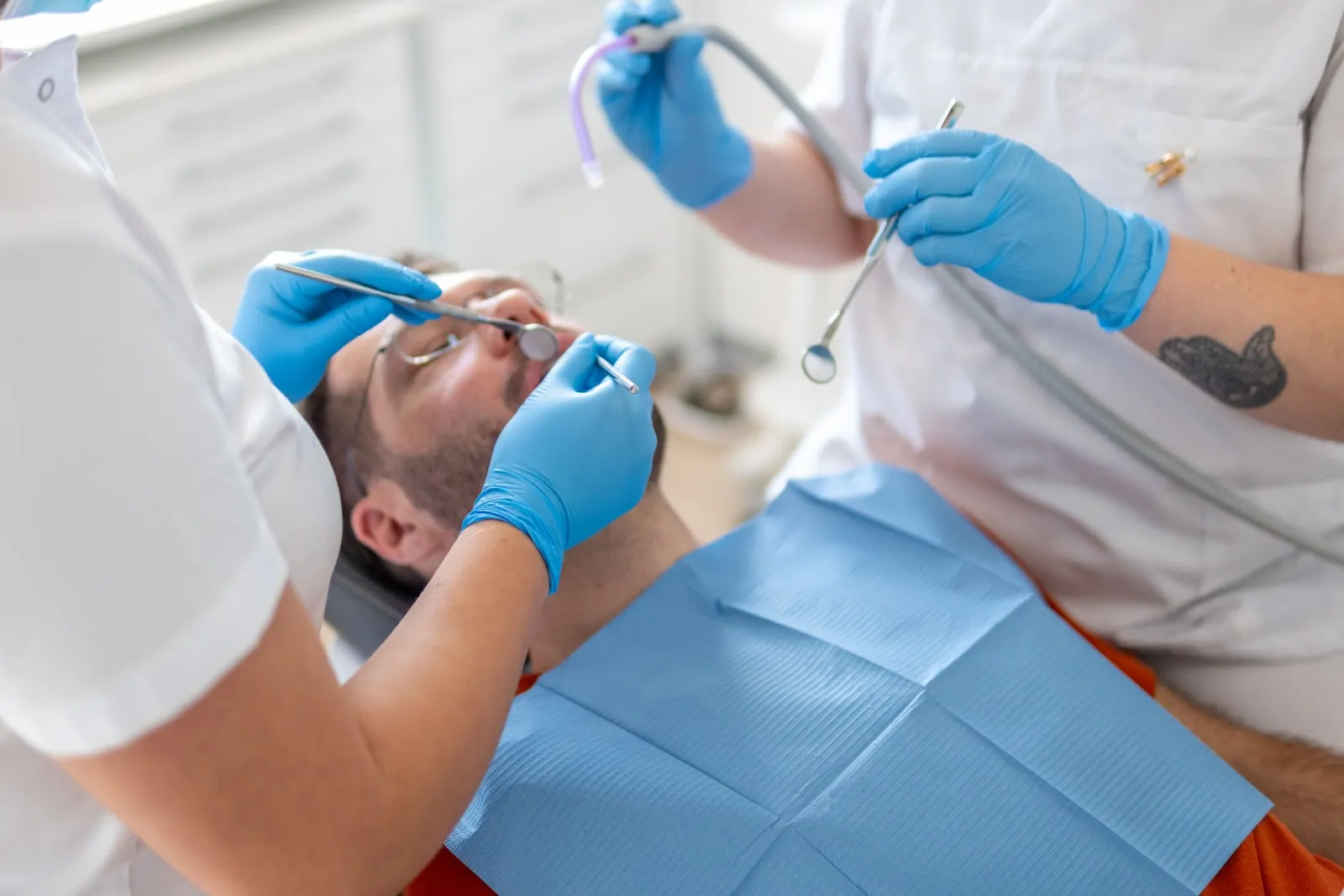
Preserving the natural tooth
Our aim is always to keep the natural tooth rather than replace it. After root canal treatment, the tooth is generally protected by a crown to restore its function and strength. Regular follow-up allows us to check the long-term success of the procedure. With modern techniques, the success rate of endodontic treatments exceeds 90%, giving your treated teeth a lasting second life.
Frequently asked questions
Is root canal treatment painful?
No. The tooth is numbed with local anaesthetic before treatment begins: you do not feel pain during the procedure. Slight sensitivity may persist for a few days after the treatment.
How many sessions are needed?
Depending on the complexity of the case, one to two sessions are generally enough to complete the treatment.
Why a crown after root canal treatment?
A root-treated tooth becomes more fragile. The crown protects it from fractures and restores its chewing function.
How much does root canal treatment cost?
Root canal treatment starts at CHF 423.-, depending on the number of roots and the difficulty of the case. A detailed treatment plan and a personalised quote are given to you at the first consultation, before any treatment begins.
Can a root-treated tooth be kept for life?
Yes, when it is protected by a crown and followed up regularly. With current techniques, the success rate of endodontic treatments exceeds 90%.
What happens if I do not have the treatment?
The infection spreads towards the bone around the root and can form an abscess. The tooth most often ends up having to be extracted.
Can a root-treated tooth develop a cavity again?
Yes. It no longer transmits pain, which delays detection: check-ups and X-rays are what make it possible to spot it in time.
Do I need to take an antibiotic?
Not systematically. The antibiotic does not replace cleaning the canal, which is the treatment; it is prescribed in situations that justify it.
